We want to create the biggest online listing collection of Railway Cottages around the world!
Please add you short stay railway cottage rentals now.
Do you have a passion for trains and railways ? We certainly do, and we have combined this passion with our love for travelling. We collect the greatest railway stations around the world that are transferred into holiday homes.
List your railway cottage on this page?
Add linkRailway cottages and station stays: a traveller's guide to sleeping by the line
There is something about railways that stays with people long after childhood. The sound of a whistle across the fields, the smell of coal smoke on a cold morning, the neat platform with its painted benches and hanging baskets. When branch lines closed or stations were no longer staffed, many of the buildings that served them were left empty. Over the years, a good number have been rescued and turned into holiday homes, and today you can sleep in a station master's house, a signal box, a crossing keeper's cottage or even a carriage that once rolled across the country.
This guide looks at the different kinds of railway stays you will find around the world, what daily life in one is really like, and how to pick the right place for your trip, whether you are a lifelong rail enthusiast or simply looking for somewhere with character.
From ticket office to guest bedroom
Railway buildings were built to a purpose, and that purpose still shapes how they feel as a place to stay.
- Station houses and station master's cottages were family homes attached to or near the station. They are often the most comfortable choice, with proper rooms, a garden and sometimes the old booking hall turned into a living room.
- Signal boxes are small, tall and full of light, because signallers needed a clear view of the line. Expect a compact upstairs room with windows on three sides, and sometimes the original lever frame kept as a feature.
- Crossing keeper's cottages stood beside level crossings, where someone had to open and close the gates for each train. They tend to be modest, cosy homes, often in quiet countryside.
- Converted carriages and sleeper cars are old passenger coaches fitted out with beds, a small kitchen and a shower. Some sit in a garden or on a length of track at a former station, others in a field with a view.
- Cabooses and depots are the North American versions: the little crew car that once rode at the end of a freight train, and the wooden depot buildings found in small towns across the United States and Canada.
- Goods sheds and water towers occasionally become larger or more unusual conversions, with high ceilings and exposed beams.
Railway stays around the world
Britain has a long tradition of preserved railways run largely by volunteers, and many old stations along closed or restored lines are now cottages. Some heritage lines even rent out camping coaches, a type of holiday carriage that railway companies offered to families many decades ago.
In North America, you will find restored cabooses in backyards and at old depots, as well as station buildings along scenic routes through the mountains and prairies. Australia and New Zealand have heritage lines and small country stations, many of them in wine regions or near the coast, and Victoria's Puffing Billy Railway in the Dandenong Ranges is one of the best known. South Africa has a strong interest in steam and old railway buildings in small towns and farming areas.
India's mountain railways, such as the Darjeeling Himalayan Railway and the Nilgiri Mountain Railway, are famous in their own right, and staying in a hill town along the route makes a memorable base. In South America, the narrow gauge steam line known as La Trochita in Argentine Patagonia draws rail lovers from far away. Japan's rural local lines pass through quiet valleys and along the coast, and some small stations and nearby houses have found new life as places to stay.
Living with the trains: what to expect
Before you book, it helps to know whether the line next to your cottage is still in use. This single fact makes the biggest difference to your stay.
On an active line, trains will pass, sometimes close to your window. For many guests that is exactly the point: watching a steam engine roll past with your morning coffee is a treat. But freight trains can run at night, and light sleepers should ask about the timetable and whether the bedrooms face the tracks. Earplugs are worth packing.
On a closed line, the track may have become a walking or cycling trail, which is wonderful for gentle days out. You get the history and the setting without the noise.
Inside a carriage, space is limited. Corridors are narrow, bunks and berths can be short, and there are usually a few steep steps up from the ground to the door. Ceilings can be low at the ends, and the bathroom may be tiny. Carriages also warm up quickly in sun and cool down fast at night, so ask about heating and ventilation.
Heritage details are part of the charm: old platform signs, enamel adverts, a ticket window, lamps, clocks and original doors. Treat them with care.
Safety near the tracks
If your cottage is beside a working railway, whether mainline or heritage, take the tracks seriously. Trains are quieter and faster than people expect, and they cannot stop quickly. Keep children close, keep dogs on a lead near the boundary, and never walk on the line or cross except at a proper crossing. Ask the owner where the fences and gates are, and whether the garden is fully enclosed. On a closed line or trail, cyclists and walkers are the main thing to watch for.
Steam days, galas and train rides
Many heritage railways run special events: steam galas, dining trains, Santa specials in December and themed days for families. Staying beside the line during one of these means you can watch the trains from the garden and then ride them yourself. These dates are popular, so book early. Remember that seasons are reversed in the Southern Hemisphere, so a Christmas steam train in Australia or South Africa runs in the heat of summer, while the cooler months there fall in the middle of the year.
Outside event days, check the timetable. Some heritage lines only run at weekends or in the busier season, so if riding the train matters to you, plan your dates around it.
Questions to ask before you book
- Is the railway line next to the property still in use, and if so, how often do trains pass, including at night?
- Do the bedrooms face the track?
- Is the property a building or a carriage, and how many steps lead up to the door?
- How big are the beds and bunks, and are they suitable for tall adults?
- How is the cottage or carriage heated and cooled?
- Is the garden fenced off from the line, and is it safe for children and dogs?
- Are pets allowed, and are there any rules near the track?
- Does the nearby heritage railway run during our dates, and are there special events?
- Is there parking, and how far is the nearest shop, pub or restaurant?
Tips for a great railway stay
Bring a torch for walking around at night, as old station yards are often unlit. Pack slippers and a warm layer, since signal boxes and carriages can feel cool in the early morning. Ask the owner about the history of the building; many have old photographs to share. And give yourself time to simply sit on the platform and watch the world go by. That slower pace is what a railway cottage is really about.
Choosing your railway cottage from this page
The railway cottages on this page are grouped by continent, country and region, so you can browse the area you want to visit. Every link takes you to the owner's own website, where you can look at the rooms, check availability and book directly. Do you own a converted station, signal box, carriage or cottage beside the line? Add your link for free with the button at the top of the page, and help fellow travellers find their way to your door.
Looking for an awesome place to spend your holiday?
Or want to advertise your houseboat, lighthouse, treehouse or glamping?
Check these links below!
Blog posts
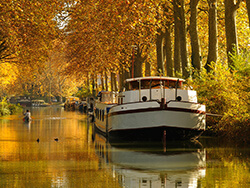
Barge river cruises in France
River cruises in France are the next luxury holiday destination. Cruise your private barge with cook down the French rivers.
Read more..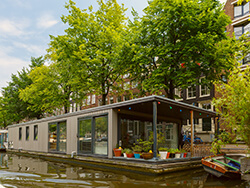
Rent a houseboat in Amsterdam
A houseboat is a great place to stay when visiting Amsterdam. Stay close to the city center but have a lot of private space.
Read more..